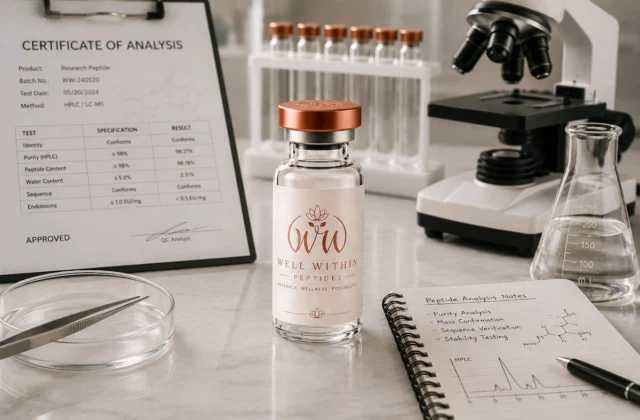

Any manufacturer can print a purity percentage on a label. The meaningful question is who verified that number, and whether that verification is independent of the party with a financial interest in the result.
In-House vs. Third-Party Testing
In-house testing — where a manufacturer analyzes its own product on its own equipment — is a normal and necessary part of quality control during production. But it isn’t a substitute for third-party verification, where an independent laboratory with no stake in the outcome runs the same analysis and publishes results that can’t be selectively edited or withheld.
What to Look For
A trustworthy COA from a third-party lab should include the lab’s name and accreditation, the specific batch number tested, the raw chromatogram (not just a summary number), and a clear testing date. If a COA is generic — not tied to a specific batch, or undated — treat it as effectively unverifiable.
Why This Matters for Reproducibility
Published research increasingly faces scrutiny over reagent sourcing and material transparency. Being able to point to independently verified, batch-specific purity documentation isn’t just good practice — it’s increasingly expected as part of rigorous experimental methodology.